
English| USD
Suggested for you
More currencies
Choose a language
Madrid's culinary reputation rests on centuries-old recipes, market-driven traditions, and a tapas culture that turns every meal into a social ritual. The capital's signature dishes—from hearty stews to fried street snacks—reflect its working-class roots and its role as a crossroads for Spain's regional kitchens. This guide maps the essential flavors that answer what food Madrid is known for, from century-old tabernas to modern mercados.
Quick answer
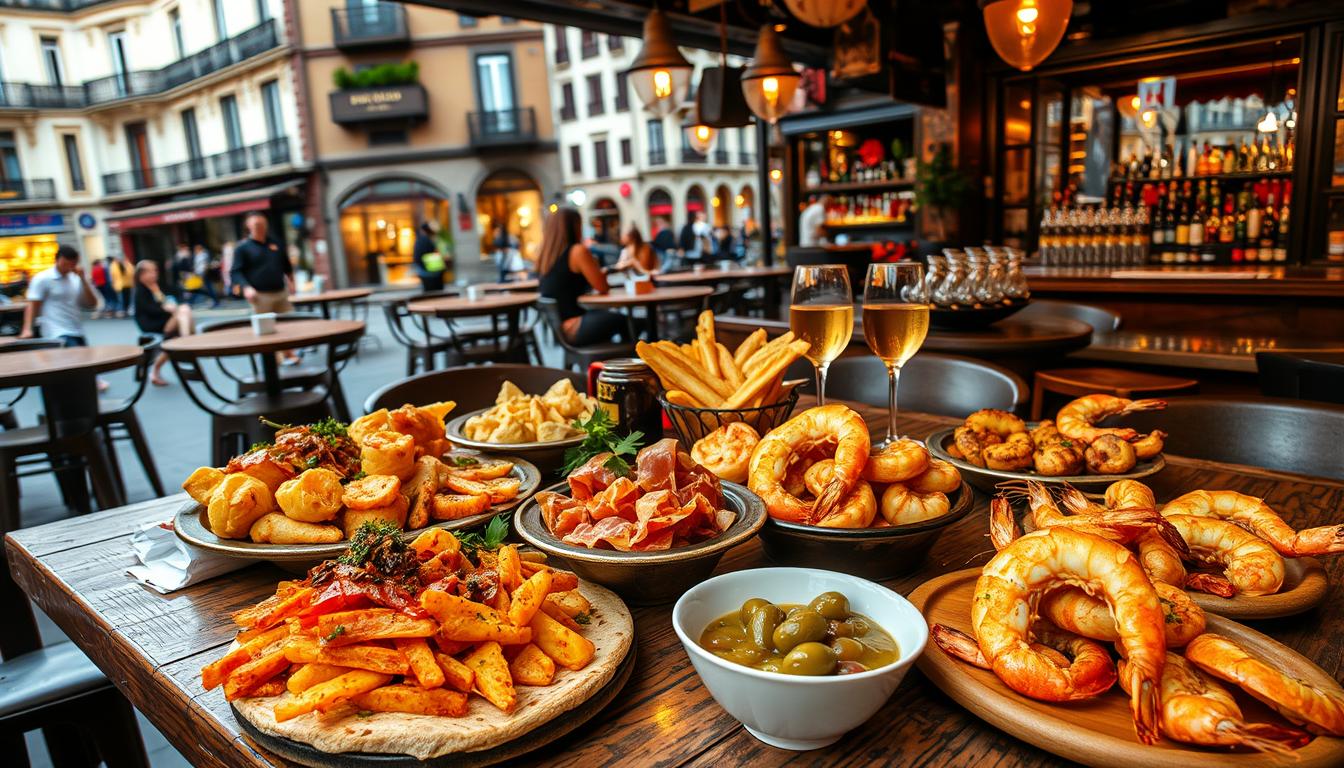
Madrid is known for cocido madrileño, a three-course chickpea stew served in traditional tabernas; bocadillo de calamares, fried squid rings in a crusty baguette sold near Plaza Mayor; churros con chocolate, deep-fried dough strips dipped in thick hot chocolate at historic chocolaterías like San Ginés; and a tapas culture centered on patatas bravas, jamón ibérico, and huevos rotos. The city's culinary identity also includes callos a la madrileña, tripe stew, and rosquillas, anise-flavored donuts tied to local festivals.
Madrid's food culture emerged not from coastal abundance or aristocratic kitchens but from the needs of laborers, muleteers, and market vendors who built the capital. Cocido madrileño, the city's most iconic dish, began as a one-pot meal cooked in clay pots over charcoal, stretched across three courses to feed entire families. The broth comes first, followed by chickpeas and vegetables, then the meats—morcilla, chorizo, tocino, and beef shank. It remains the anchor of Sunday lunches across the city, served in century-old casas de comidas where the recipe has barely changed since the 1800s. Bocadillo de calamares, Madrid's most famous street food, traces its origins to the bars ringing Plaza Mayor, where fried squid became the go-to snack for workers and students. The sandwich is elemental—crisp Roman-style calamari tucked into a barra de pan, no lettuce, no sauce, just oil and salt. It is sold at La Campana, El Brillante, and dozens of unnamed bars that open before dawn to serve the morning market crowd. The dish has no counterpart elsewhere in Spain; it belongs entirely to Madrid. Churros con chocolate anchor the city's breakfast and late-night rituals. Chocolatería San Ginés, operating since 1894 near Puerta del Sol, serves the canonical version: ridged churros fried to order, paired with a cup of melted chocolate so thick it coats the spoon. The tradition extends beyond tourist landmarks—neighborhood churrerías across Lavapiés, Malasaña, and Chamberí follow the same formula, and Madrileños queue for porras, the wider, softer cousin of the churro, on Sunday mornings. Tapas culture in Madrid differs from Andalusia's free-tapa tradition or the Basque Country's pintxos bars. Here, tapas are ordered and paid for individually, and the ritual centers on the caña—a small beer—and the practice of ir de cañas, moving from bar to bar. Patatas bravas, fried potato cubes topped with brava sauce and aioli, appear on every menu. Huevos rotos, fried eggs broken over jamón and potatoes, originated at Casa Lucio and spread citywide. Oreja a la plancha, grilled pig's ear, and callos, tripe simmered in paprika and chorizo, remain staples in traditional tascas. Mercado de San Miguel and Mercado de San Antón represent Madrid's modern food hall movement, but the Mercado de Maravillas and Mercado de la Cebada in working-class neighborhoods still serve the city's daily appetite for fresh produce, cured meats, and seafood trucked in from Galicia each morning. The question of what food Madrid is known for leads not to a single dish but to a network of rituals—cocido on Thursdays, churros after midnight, vermouth and conservas on Sunday afternoons—that define the rhythm of life in the capital.
“Cocido madrileño, served in three courses from a single pot, remains the anchor of Sunday lunches across the city in century-old casas de comidas where the recipe has barely changed since the 1800s.”
Madrid cuisine centers on traditional stews, fried seafood snacks, and historic market culture. Visitors can explore refined culinary halls or seek out humble neighborhood taverns to experience these authentic flavors.
market
Located at Plaza de San Miguel, this historic iron-structure market offers a high-end selection of gourmet tapas and local wines.
café
Situated near Puerta del Sol, this long-standing establishment is known specifically for serving thick hot chocolate with churros.
street
Found steps from Plaza Mayor, this venue is famous for the traditional bocadillo de calamares, a fried squid sandwich.
restaurant
Located near the Royal Palace, this family-run spot specializes in cocido madrileño, a hearty chickpea-based stew cooked in individual clay pots.
To experience Madrid’s culinary offerings with minimal congestion, the optimal arrival window for popular markets like Mercado de San Miguel is 10:00–12:00. This timeframe allows visitors to observe local rhythm before the peak lunch crowds arrive.
Mild temperatures, 15°C to 24°C; ideal outdoor dining.
Mild weather supports extended tapas tours through city streets. Local markets are active with fresh seasonal ingredients.
Cooler air, 12°C to 22°C; comfortable for exploration.
The city returns to its routine after the summer break. Crisp temperatures make hot dishes like cocido madrileño popular.
—
Visiting during weekday morning hours provides the most space to engage with vendors. This window is effective for avoiding the intense rush of the local lunch hour.
Verdict: For the best balance of weather and crowd levels, plan your visit for Tuesday to Thursday between 10:00 and 12:00 during the months of April or October.
The Mercado de San Miguel maintains consistent daily operations to accommodate visitors exploring the culinary heritage of Madrid.
Exploring the Madrid culinary scene, specifically public markets and street areas, does not require an entrance fee. Costs are instead determined solely by the food and drinks you choose to purchase.
Verdict: A typical visitor pays 0 EUR for entry, with total costs depending entirely on individual food and beverage selections.
The Mercado de San Miguel is located at Plaza de San Miguel, s/n, 28005 Madrid, Spain, situated in the heart of the city near Plaza Mayor. The most efficient way to reach this central culinary hub is via the Madrid Metro system.
Line 2 or Line 3 to Sol station
Lines 3, 31, 50, or 65 to Plaza Mayor
From Puerta del Sol, walk west via Calle Mayor
For the best experience and to navigate the stalls comfortably, aim for the 10:00–12:00 arrival window to avoid peak lunch crowds. As the market is located in a historic, pedestrian-heavy zone, public transit or walking is recommended over driving.
Everything you need to know about what food is madrid known for
Madrid is renowned for iconic dishes such as bocadillo de calamares, cocido madrileño, and patatas bravas. These traditional flavors form the backbone of the city's rich gastronomic heritage.
Guided tours allow visitors to navigate the complex culinary landscape efficiently. These experiences offer insight into local history while highlighting key regional specialties.
The best arrival window is 10:00–12:00. Visiting during these hours helps avoid peak lunch crowds and provides access to fresh morning produce.
There is 0 EUR entrance fee for public culinary markets such as Mercado de San Miguel. You are free to browse and purchase individual items at your own pace.
Many establishments offer a variety of options including vegetarian and gluten-free versions of classic recipes. Asking servers about ingredients remains the most effective way to identify suitable dishes.
To maximize your time, consider focusing on central markets and historic taverns. Combining visits to landmarks with nearby food stops provides a comprehensive overview of the city.
Most culinary venues are welcoming to families and offer smaller portions or child-friendly items. Engaging with a local guide can help identify specific spots that cater well to younger travelers.
Best Madrid Food Tours
Read more Tickets & toursVegetarian Food Tours in Madrid
Read more GuideHow to Eat Cheap in Madrid
Read more Tickets & toursTapas Tours Madrid
Read more Tickets & toursMadrid Food Tours with Kids
Read more GuideLocal Food in Madrid
Read more Tickets & toursPrivate Food Tours in Madrid
Read more